Thailand Tea and Coffee Tour Packages from India
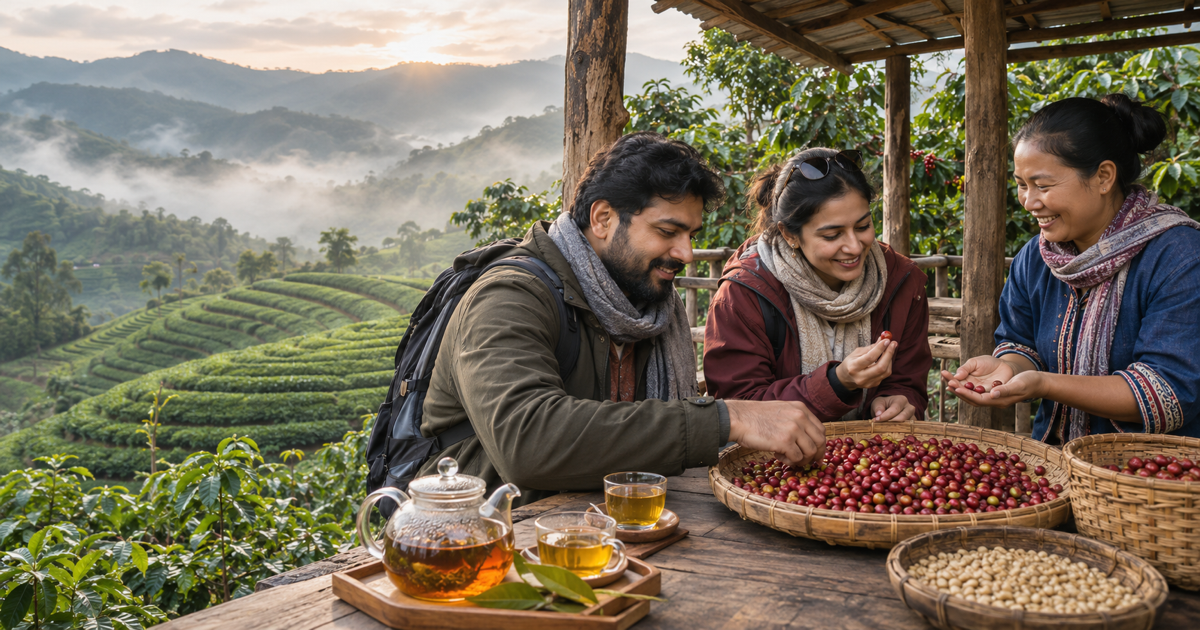
A Thailand tea and coffee package should offer more than a café checklist. Northern routes can connect terraced tea landscapes, community-grown Arabica, processing demonstrations, guided tastings and the people whose work turns leaves and cherries into a finished drink. The Tourism Authority of Thailand (TAT) currently publishes dedicated tea and caffeine routes, making this a credible specialist holiday rather than an improvised food-tour label. This guide helps travellers from India compare hosts, mountain transport, participation, caffeine, dietary needs and purchases without promising harvest activities that may not be available on every date.
Decide how central tea and coffee are to the trip
A single plantation viewpoint can fit into a conventional Chiang Rai tour. A serious origin-focused holiday needs farm appointments, processing time, guided tasting and slower travel through the highlands. Decide whether the goal is scenery, learning, photography, buying, sensory evaluation or meeting producers.
A package that lists several cafés is not automatically a plantation tour. Ask how many stops grow or process tea or coffee, which are retail cafés, and what the traveller will do at each place.
- One scenic tea-estate visit
- Coffee-community half day
- Guided brewing or tasting workshop
- Tea-and-coffee day route
- Three-night Chiang Rai origin extension
- Specialist producer meetings
- Companion itinerary for non-drinkers
Use Chiang Rai as the clearest first base
TAT's official listings place tea plantations, coffee communities and related visitor experiences across Chiang Rai. Singha Park combines agricultural landscapes and tea fields close to the city, while Choui Fong offers terraced tea scenery in Mae Chan. Ban Pha Hi connects coffee cultivation with an Akha mountain community.
Doi Wawee supports a deeper tea route, and TAT's sustainable-tourism product material describes guided field walks, historic tea knowledge, brewing and tea-blending experiences. These places are not one compact attraction: road time, altitude and host availability should determine the route.
- Chiang Rai city: practical hotel and airport base
- Singha Park: accessible introduction to agricultural tourism
- Choui Fong: tea landscape and retail experience
- Ban Pha Hi: community coffee context
- Doi Wawee: highland tea traditions
- Doi Tung area: development and agricultural context
Match the activity to the agricultural season
Tea plucking and coffee harvesting are seasonal work, not performances that can be guaranteed every day. Weather, crop condition, processing schedules and the producer's priorities affect what visitors can observe. A responsible operator confirms the actual activity close to travel and never stages wasteful picking only for photographs.
Outside harvest periods, a visit can still include field interpretation, processing equipment, roasting or drying explanations, guided tasting and local history. Ask the host which components are live, demonstrated, seasonal or unavailable.
- Current field condition
- Harvest activity confirmed or excluded
- Processing stage available to view
- Weather restrictions
- Workshop alternative
- No guarantee of mist, blossoms or ripe cherries
- No entry into working plots without permission
Check who hosts and who benefits
A community coffee visit should name the local host, cooperative, farmer or guide rather than presenting the village as an anonymous photo stop. Ask whether the host approves the group size, receives a participation fee and sets photography boundaries.
Private estates, community farms and large agricultural attractions operate differently. None is inherently more authentic. The package should describe ownership and visitor format accurately so travellers know whether they are joining a farm walk, a community exchange, a commercial estate tour or a café experience.
- Named host or organisation
- Appointment confirmed
- Host fee included
- Group size accepted
- Local guide language
- Photography permission
- Purchase remains optional
- Cancellation terms protect the host
Treat tasting as guided learning, not unlimited consumption
Ask how many teas or coffees are served, the approximate portion, brewing method and whether food is included. A structured tasting can compare aroma, processing and origin with small servings; a long route should not require a full caffeinated drink at every stop.
Travellers who are pregnant, sensitive to caffeine, taking medication or managing a health condition should follow qualified medical advice. Request decaffeinated, low-caffeine or non-caffeinated local alternatives where genuinely available, and keep water and meals in the schedule.
- Number and size of samples
- Tea, coffee or both
- Caffeine disclosure where known
- Water between samples
- No pressure to finish every serving
- Non-caffeinated companion option
- Food timing
- Stop tasting if unwell
Plan mountain roads conservatively
Northern tea and coffee destinations may involve steep, winding roads and substantial travel beyond Chiang Rai city. A map estimate does not establish vehicle suitability, weather conditions or safe night driving. Use a licensed local driver and a vehicle suited to the confirmed route.
Avoid combining several distant highland communities in one day. An early start with one main origin visit and one nearby cultural or scenic stop gives the host and traveller more time than a rushed circuit. People prone to motion sickness should discuss appropriate professional advice and sit where the journey is most comfortable.
- Exact road route
- Suitable insured vehicle
- Experienced local driver
- Daylight return where possible
- Seat belts for every passenger
- Weather and road-status check
- Rest breaks
- No tight airport connection
- Backup activity if access changes
Confirm food and dietary details for Indian travellers
Tea estates and coffee villages may serve set snacks, desserts or local meals. Tea-flavoured cake, condensed milk drinks and coffee-shop food are not automatically vegetarian, vegan, Jain, halal or allergen-safe. Send dietary requirements in writing and ask the host what can genuinely be prepared.
For a remote route, carry a simple backup snack and enough drinking water. Do not expect the guide to find an Indian restaurant in every mountain community. A well-designed package can provide one confirmed meal and let the tasting remain focused on the origin experience.
- Vegetarian or Jain ingredients confirmed
- Egg, dairy and gelatin check
- Nut and cross-contact questions
- Halal requirements
- Unsweetened drink option
- Sealed drinking water
- Backup snack
- Meal time protected from tastings
Buy tea and coffee with useful information
Before purchasing, ask for the producer, origin, harvest or roast information where available, processing style, packing date, storage guidance and brewing recommendation. A scenic farm name alone does not explain the contents of a bag.
Keep products commercially sealed for the journey and review current Indian customs and plant-product rules before importing larger quantities. Loose leaves, green coffee, plants, seeds and agricultural materials can raise different issues from ordinary packaged roasted coffee or processed tea. An operator should not provide a blanket customs guarantee.
- Producer and origin
- Tea type or coffee variety where stated
- Processing method
- Roast and packing information
- Sealed food-safe packaging
- Invoice
- Airline baggage allowance
- Indian customs check
- No undocumented plants or seeds
Build a balanced six-night northern route
A first trip can use two nights in Chiang Mai and four in Chiang Rai, or remain entirely in Chiang Rai for less transit. Keep one day for the city and temples, one easy agricultural introduction and one deeper highland origin visit with a rest day between demanding road journeys.
This is a planning pattern, not a fixed offer. Tea specialists may prefer Doi Wawee, coffee-focused travellers may prioritise a community route, and mixed-interest couples may choose only one origin day.
- Day 1: arrive in northern Thailand and rest
- Day 2: city culture and independent cafés
- Day 3: transfer to Chiang Rai if needed
- Day 4: accessible tea-estate or agricultural visit
- Day 5: open day for temples, art or rest
- Day 6: confirmed community coffee or highland tea route
- Day 7: buffered departure
Final package checklist
A transparent package names the farms and communities, states what is seasonal, separates tastings from retail stops and shows the complete road plan. It should include host fees, guide language, meals, vehicle details and a weather alternative.
Reconfirm opening, appointment and road conditions close to travel. TAT listings and product routes establish the destinations and types of experience, but they do not guarantee that every workshop, harvest activity, menu or product will be available on the traveller's date.
- Named hosts
- Confirmed dates and appointments
- Seasonal activity status
- Tasting format and caffeine plan
- Vehicle and driver
- Guide language
- Dietary arrangements
- Host payment
- Photography rules
- Purchase and customs plan
- Weather alternative
- Departure buffer
Official sources
These primary sources were checked on November 22, 2026. Reconfirm event operations close to travel.
Plan a northern Thailand route around genuine origins
Share your dates, tea or coffee interests, dietary needs and preferred pace for a Thailand package with confirmed hosts and realistic mountain travel.