Thailand Culinary Tour Packages from India: Food Holiday Guide
A Thailand culinary tour should reveal how food changes between regions rather than turning every day into an exhausting sequence of tastings. Bangkok can introduce central Thai cooking and diverse neighbourhoods, Chiang Mai adds Lanna traditions, Isan brings its own herbs and fermented flavours, and the south offers distinctive spice, seafood and multicultural influences. This guide helps travellers from India build a food-led package with responsible local experiences, clear dietary communication and enough unstructured time to enjoy each meal.
Choose the purpose of the food holiday
Some travellers want street-food discovery, while others care more about regional history, hands-on cooking, fine dining, markets or vegetarian food. Rank those interests before selecting cities because one generic food tour cannot cover them equally well.
The package should also define who will participate. Children, older travellers, cautious eaters and serious culinary enthusiasts may need different group sizes, walking distances, spice levels and meal times.
- Neighbourhood food walks
- Regional home-style meals
- Market visits with cultural interpretation
- Hands-on cooking classes
- Chef-led or contemporary dining
- Farm, orchard or producer visits
- Vegetarian or dietary-focused discovery
Build the route around regional cuisines
Tourism Authority of Thailand material describes four broad culinary regions: central, northern, northeastern and southern Thailand. These labels are useful starting points, but each province and community has its own ingredients and traditions.
For a first food-focused trip, Bangkok and Chiang Mai provide a manageable city pair. Travellers with more time can add Phuket for southern and Sino-Thai influences or choose an Isan stop for northeastern food. Adding every region to a short holiday creates more transit than meaningful tasting.
- Five nights: Bangkok with one market walk and one cooking class
- Seven nights: Bangkok plus Chiang Mai
- Eight to nine nights: Bangkok, Chiang Mai and one carefully chosen regional extension
- Ten nights or more: three bases with producer or community experiences
Bangkok: start with neighbourhood context
Bangkok offers central Thai dishes alongside food traditions shaped by Chinese, Muslim, Indian and other communities. A useful food walk explains the neighbourhood and ingredients instead of rushing between famous stalls solely for social-media photographs.
Choose a route close to your hotel or accessible by rail or boat. Confirm whether the tour includes sitting breaks, drinks, transport between stops and a guide who can explain dietary questions in Thai. Markets and vendors change, so a responsible operator should be able to substitute a stop without pretending every stall is guaranteed.
- Exact meeting point and finish location
- Walking distance and stair use
- Number and size of tastings
- Seated versus standing stops
- Private or shared group
- Toilet and rest breaks
- Alternative when a vendor is closed
Chiang Mai: combine a market with a cooking class
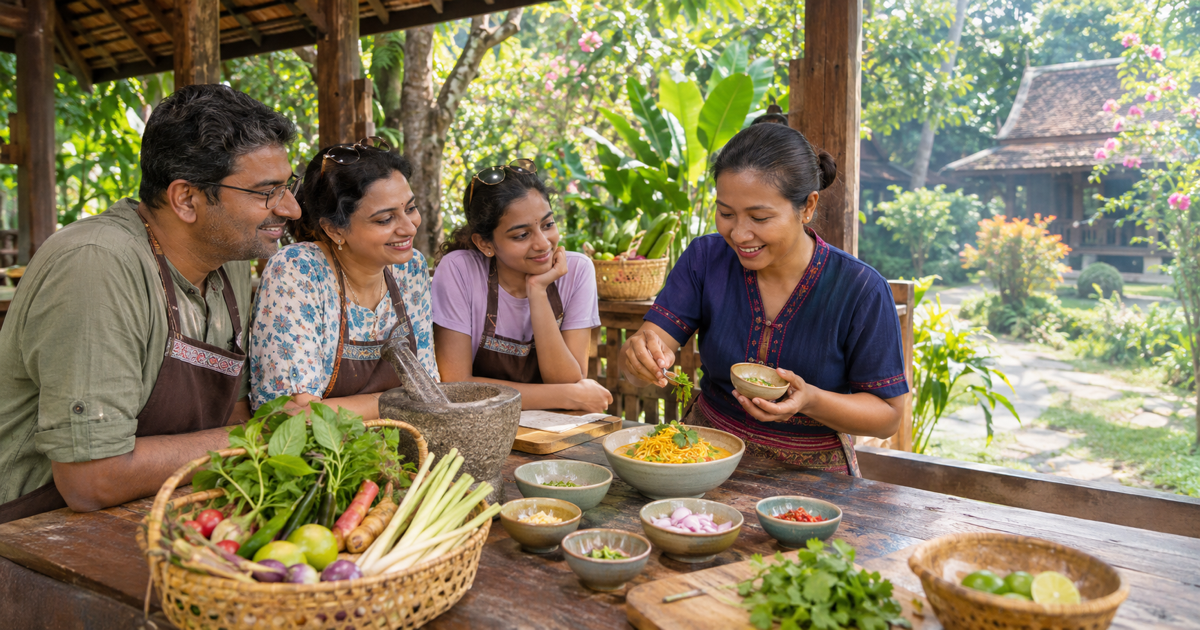
Northern Thai cuisine provides a clear contrast with Bangkok, and a cooking class can connect ingredients, technique and cultural context. Ask whether the market visit is instructional or simply a brief shopping stop, and whether each participant has a workstation.
Do not judge a class by the number of dishes alone. Smaller menus, careful instruction and enough time to cook safely may be more valuable than a long list of pre-prepared recipes. Request the current menu before booking if dietary suitability is important.
- Class duration and group size
- Demonstration or hands-on format
- Individual or shared cooking station
- Market visit included or separate
- Recipes provided digitally or on paper
- Hotel transfer boundaries
- Meal portions and takeaway policy
Phuket and the south: plan beyond seafood
TAT describes Phuket as a gastronomy destination shaped by Thai, Chinese and international influences. A food-led Phuket stay can combine Old Town context, local breakfasts, southern flavours and one relaxed coastal meal instead of treating the island only as a seafood stop.
Southern food can be spicy and may use seafood, fish sauce, shrimp paste or shared cooking equipment. Ask about ingredients dish by dish. A vegetarian-looking curry or salad should not be assumed to meet vegetarian, vegan, Jain or allergy requirements.
- Old Town food walk with historical context
- One southern Thai restaurant chosen for the group
- Cooking or producer experience with verified access
- Free meal near the hotel
- Beach day without a compulsory food programme
Protect vegetarian, Jain and allergy needs
Dietary labels do not always describe hidden stock, sauces, curry paste, shared oil or cross-contact. Send the operator a written food brief before payment and ask what can actually be accommodated at every prepaid experience.
For a severe allergy, obtain medical guidance before travel, carry prescribed medication and choose providers willing to discuss ingredients and kitchen controls. No tour company should promise zero risk unless the responsible food business can support that claim.
- Foods and ingredients to avoid
- Whether egg, dairy, fish sauce and shrimp paste are acceptable
- Onion, garlic and root-vegetable restrictions where relevant
- Cross-contact seriousness
- Preferred spice level
- Emergency plan and nearby medical access
- Backup meal near each hotel
Balance tastings with ordinary meals
A tasting tour, cooking class and elaborate dinner on the same day can waste food and leave travellers uncomfortable. Space major culinary experiences across the itinerary and keep breakfast or dinner flexible when the day's activity already includes a full meal.
Hydration, heat and walking affect appetite. Allow rest after markets, avoid scheduling intense outdoor sightseeing immediately after a long lunch, and do not pressure anyone to sample food they do not want.
- One main food experience per day
- At least one unscheduled meal every day or two
- Water and shaded breaks
- Smaller tasting portions where possible
- Early dinner after an early market start
- No forced eating or drinking activities
Visit markets and communities responsibly
A working market is not a staged attraction. Keep aisles clear, ask before close-up photography and avoid handling produce unless invited. A guide should explain what visitors are seeing without obstructing vendors or turning ordinary work into a performance.
Community meals and producer visits should state who hosts the experience, what is included and how payment supports the provider. Avoid claims of authenticity that reduce a living culture to a sales label.
- Small group size
- Permission before portraits
- No blocking customers or work areas
- Fair payment without aggressive bargaining
- Waste kept to a minimum
- Reusable bottle where safe and practical
- Clear consent for home or community access
Ask what the package price really covers
A culinary package quotation should separate accommodation, transport, guides, tastings, classes and restaurant meals. The phrase food tour included is incomplete unless the supplier names the date, duration, meeting point and inclusions.
Do not rely on sample prices from an old blog or social post. Restaurant menus, supplier rates and exchange values change, so compare current written quotes on the same assumptions and pay attention to cancellation terms for prepaid classes or reservations.
- Exact hotels and neighbourhoods
- Breakfast and other included meals
- Number and size of food-tour tastings
- Cooking class menu and transport
- Restaurant reservations versus prepaid menus
- Guide language and group size
- Drinks, tips and personal orders
- Cancellation and substitution policy
Sample eight-night culinary itinerary
A balanced route can use four nights in Bangkok and four in Chiang Mai. It provides regional contrast without adding a third airport transfer and leaves enough space for sightseeing unrelated to food.
This is a planning framework rather than a fixed supplier schedule. Market days, class menus, restaurant closures and transport should be checked for the actual travel dates.
- Night 1: Bangkok arrival and simple meal near the hotel
- Day 2: old-city sightseeing with a flexible dinner
- Day 3: guided neighbourhood food walk
- Day 4: free day or one selected restaurant
- Day 5: travel to Chiang Mai and rest
- Day 6: market visit and hands-on cooking class
- Day 7: Lanna culture day with one local meal
- Day 8: free exploration and dietary-safe favourites
- Day 9: departure with an appropriate airport buffer
Final booking checklist
Before paying, make sure the itinerary works as a holiday as well as a list of meals. It needs free time, suitable hotels, realistic transfers and alternatives for anyone who skips an activity.
Current venue details and menus take precedence over sample itineraries. Reconfirm time-sensitive reservations shortly before travel, but avoid rebuilding the entire trip around a single restaurant that may change its hours or availability.
- Regional route matches the trip length
- Dietary brief accepted in writing
- Food experiences do not overlap
- Current meeting points saved offline
- Walking and mobility needs discussed
- No unsupported meal or vendor guarantees
- Travel insurance checked for relevant needs
- Flexible backup for closures or illness
Official sources
These primary sources were checked on November 12, 2026. Reconfirm event operations close to travel.
Build your Thailand food holiday
Share your dates, preferred regions, dietary needs and appetite for activities to create a culinary package with clear inclusions and comfortable pacing.