Thailand Arts and Crafts Tour Packages from India
A Thailand arts and crafts package can be a single pottery class during a Bangkok stay, a northern route through weaving and ceramic communities, or a deeper holiday built around learning directly from artisans. Those experiences need different schedules, transport, language support and expectations. Thailand's Tourism Authority now places craftsmanship, local lifestyles and hands-on creativity within its 2027 tourism priorities, making this a useful time to plan carefully. This guide helps travellers from India compare genuine workshops, avoid turning communities into photo backdrops, and understand what happens to anything they make or buy.
Choose between a craft activity and a craft-led holiday
A two-hour workshop fits naturally into a Bangkok, Chiang Mai or beach itinerary. A craft-led journey may require several provinces, advance group appointments and time for drying, firing or finishing work. Decide whether the purpose is casual participation, serious learning, cultural interpretation or shopping before comparing packages.
TAT's 2027 product direction describes participatory art, craft-community and local-experience formats rather than one standard tour. Ask the operator to name every workshop, its host and the traveller's actual role. Watching a demonstration, decorating a prepared object and learning a production technique are three different experiences.
- One introductory workshop
- Half-day studio and neighbourhood visit
- Several workshops from one city base
- Multi-province craft route
- Private tuition for an experienced maker
- Craft shopping with interpretation
- Parallel itinerary for non-participating companions
Match the region to the craft rather than collecting destinations
Chiang Mai and the wider north can support pottery, textiles, natural dyeing, umbrella making, woodwork and contemporary studios. TAT identifies Chiang Mai as a Creative City of Crafts and Folk Art and highlights northern craft communities, while Sukhothai combines historical context with ceramics and other making traditions.
Central Thailand can add basketry, ceramics and community workshops within reach of Bangkok. The northeast has strong silk, pottery and community craft traditions, but travel between centres can be substantial. Select one coherent region instead of building a rushed national checklist.
- Chiang Mai: Lanna craft communities and studios
- Sukhothai: ceramics, heritage and workshops
- Ang Thong: bamboo basketry traditions
- Sakon Nakhon: ceramics, carving and silk weaving
- Nakhon Ratchasima: Dan Kwian pottery
- Chiang Rai and Nan: Thai Lue weaving communities
- Bangkok: museums, design districts and short workshops
Verify that the experience benefits the maker
Ask whether the artisan, cooperative or community sets the activity format and receives payment directly or through a transparent local partner. A low package price can conceal unpaid demonstrations, pressure to buy or a visit arranged without the workshop's consent.
Small studios may need minimum group sizes, advance notice or limits on photography. Respect those conditions. Do not expect private homes, looms, kilns or family workspaces to operate as open attractions merely because an old travel listing names the village.
- Named artisan, studio or cooperative
- Appointment confirmed directly
- Host fee included
- Group size accepted by the host
- Photography permission
- No compulsory purchase
- Clear cancellation payment to the host
- Community rules explained before arrival
Understand what the workshop actually includes
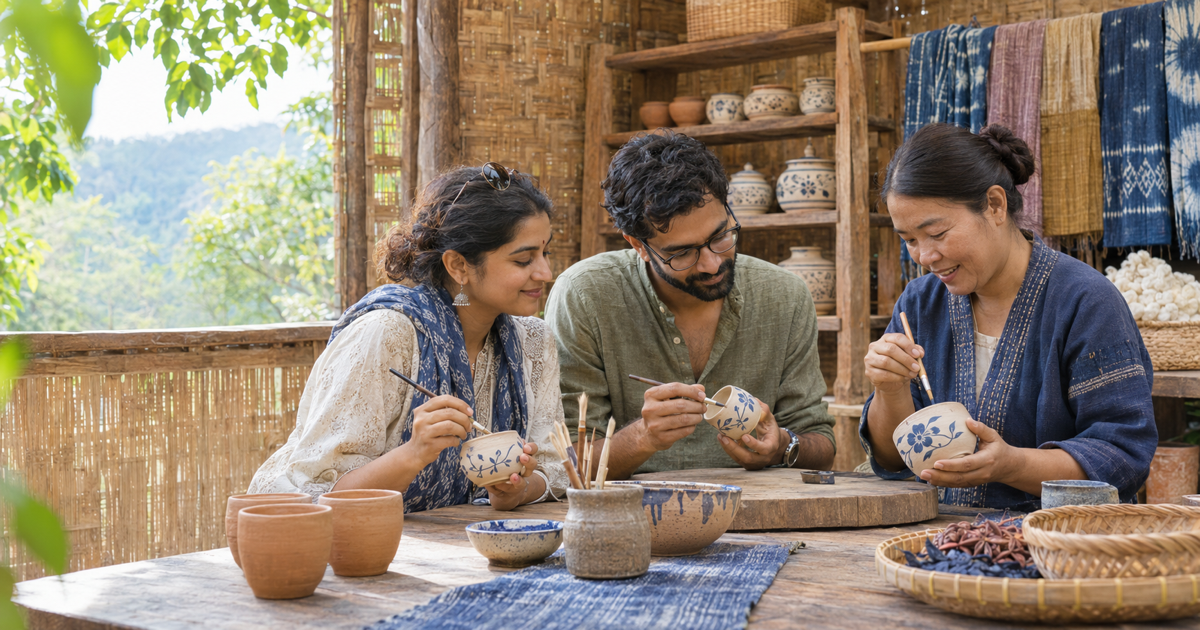
A pottery session may involve hand-building, wheel work, painting a prepared form or observing kiln firing. A textile activity may cover dye preparation, simple weaving, embroidery or only a demonstration. The finished result and time required depend on the technique.
Request a written activity description, suitable age range, language support, materials, protective clothing and finishing process. If firing or drying takes longer than the stay, confirm whether the studio ships the item, offers collection, or substitutes a finished piece. Never assume same-day completion.
- Technique and difficulty
- Demonstration versus hands-on time
- Materials included
- Instructor-to-participant ratio
- Language used
- Protective apron or equipment
- Drying, firing or finishing time
- Collection or shipping method
- Policy if the piece cracks or cannot be finished
Plan for materials, allergies and physical comfort
Clay, dyes, fibres, wood dust, glazes, adhesives and metalwork tools can create individual health or comfort concerns. Ask the workshop about materials and ventilation, disclose relevant allergies and follow professional medical advice when needed. A natural label does not guarantee that a substance is safe for every participant.
Workshop floors, low stools, foot-operated wheels and long periods of sitting or standing may affect travellers with mobility, back, vision or dexterity needs. Request the exact workspace setup and an adapted activity rather than relying on the word accessible.
- Material and ingredient list where available
- Ventilation and dust control
- Gloves or eye protection when appropriate
- Hand-washing facilities
- Chair height and back support
- Step-free route and toilet access
- Breaks for heat and fatigue
- Alternative task for children or limited dexterity
Buy respectfully and check what can travel to India
Buying from the maker can support the visit, but it should remain optional. Ask for the material, maker, care instructions and price before purchasing. Fragile ceramics, lacquer, baskets, textiles and jewellery have different packing, airline and customs implications.
Indian baggage and import rules depend on the object, material, value and current regulation. Avoid items made from protected wildlife, restricted plant material, undocumented antiques or sacred objects whose export is controlled. For anything old or expensive, obtain a proper invoice and seek current official customs guidance rather than accepting a seller's verbal assurance.
- Itemised receipt
- Maker and material details
- Protective packaging
- Airline cabin and checked-baggage limits
- Indian customs declaration check
- Thai export requirements for antiques or sacred objects
- No protected wildlife material
- Shipping insurance and damage terms
Build transport around workshop reality
Craft villages may sit outside city centres, and map distance does not show road conditions, return transport or the time required to locate a small studio. A private vehicle can be useful for a group carrying purchases, while a city workshop may work with rail and a short walk.
The driver should receive the host's current location and phone number, not only an attraction name copied from a directory. Confirm whether the vehicle waits, returns later or continues to another stop. Leave extra time for a workshop that runs over without endangering a flight or train.
- Exact meeting point
- Host phone number
- Door-to-door travel time
- Driver waiting arrangement
- Space for purchases
- Child seat or mobility equipment
- Weather-safe pickup
- Return buffer
- No airport connection immediately afterward
Keep photography and cultural interpretation honest
Ask before photographing people, processes, designs or private workspaces. Some patterns and techniques carry community, family, spiritual or commercial significance. Payment for a workshop does not transfer ownership of a design or grant permission for commercial reproduction.
A knowledgeable guide should explain the craft's place in local life without inventing an ancient origin for every product. Distinguish a documented traditional technique, a contemporary artisan adaptation and a souvenir made for visitors. All three can have value when described accurately.
- Permission before portraits
- No filming of restricted techniques
- No copying designs for commercial use
- Credit the maker when sharing
- Avoid interrupting production for repeated poses
- Separate verified history from guide interpretation
- Respect requests not to photograph
A balanced seven-night route example
A first craft-focused trip could use three nights in Bangkok and four in Chiang Mai. Include one museum or design-neighbourhood visit, one short city workshop and two northern sessions separated by an open day. This provides contrast without making every day another class.
This is a planning pattern, not a fixed package. Travellers focused on ceramics could instead combine Bangkok with Sukhothai, while textile enthusiasts may prefer a slower northern route. Current host availability and transport should decide the final sequence.
- Day 1: Bangkok arrival and rest
- Day 2: design museum or neighbourhood context
- Day 3: short hands-on city workshop
- Day 4: fly or take the planned connection to Chiang Mai
- Day 5: artisan community visit and workshop
- Day 6: open day for rest or non-craft interests
- Day 7: second workshop and purchase collection
- Day 8: buffered departure
Final package checklist
A strong arts and crafts package names the hosts, techniques, participation level, materials, language, transport and finishing process. It also makes workshop fees visible, protects the host from last-minute disruption and gives travellers a clear choice about purchases.
Reconfirm opening days, appointment times and product-shipping arrangements before payment. Official tourism sources establish the destinations and Thailand's creative-tourism direction; they do not guarantee the availability or quality of every commercial workshop.
- Named hosts and confirmed appointments
- Exact technique and hands-on duration
- Materials and safety information
- Guide language
- Transport and waiting time
- Host payment and cancellation terms
- Photography permission
- Finished-item collection
- Baggage, customs and shipping plan
- Companion alternative
- Departure buffer
Official sources
These primary sources were checked on November 21, 2026. Reconfirm event operations close to travel.
Build a Thailand craft journey around real makers
Share your dates, preferred craft, experience level and cities for a Thailand package with confirmed workshops, comfortable transport and time to learn.