Thailand Heritage Tour Packages from India: Route Planning Guide
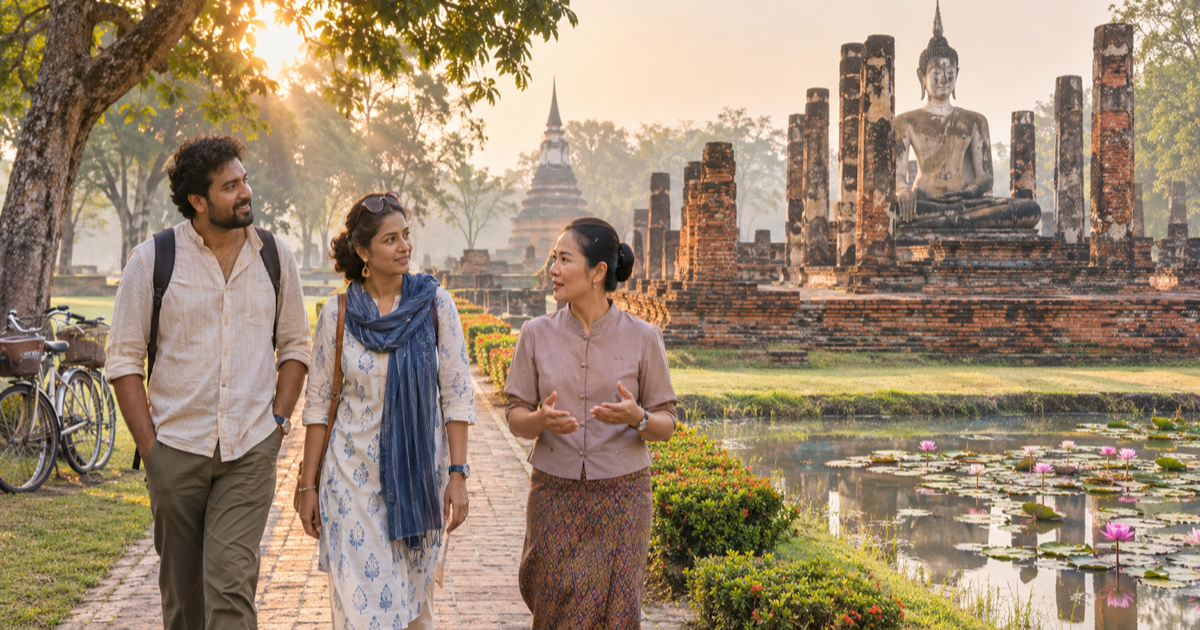
A Thailand heritage package should do more than move travellers between famous temples. It needs enough time to understand different periods and regions, practical transfers between historical cities, hotels that support early starts and rest, and respectful behaviour at places that remain sacred. This guide helps travellers from India design a cultural route without inventing access, prices or guaranteed ceremonies.
Define what heritage means to your group
One traveller may be interested in Buddhist art and active temples, while another prefers archaeology, architecture, museums, crafts or local neighbourhood history. Write the group's main interests before adding destinations, because a heritage label alone does not explain the experience.
Separate sacred sites from archaeological parks in the planning brief. Both deserve respect, but dress, photography, opening patterns and visitor behaviour may differ. A guide should explain the context instead of treating every stop as a quick photo opportunity.
- Living temples and Buddhist practice
- Ancient capitals and archaeological parks
- Khmer-era monuments in northeastern Thailand
- Traditional crafts and historic communities
- Museums, architecture and royal history
- Food traditions connected to place
Choose a route that fits the trip length
Bangkok and Ayutthaya form the simplest first heritage route. Bangkok provides living temples, museums and historic neighbourhoods, while Ayutthaya can be visited on a deliberate day trip or overnight stay. Travellers with more time can add Sukhothai or Chiang Mai, but each addition requires a real transport day.
Sukhothai and Ayutthaya should not be treated as interchangeable boxes to tick. Each deserves time for context, walking and rest. If the group has fewer than eight nights, choose one ancient capital rather than compressing both into a rushed cross-country schedule.
- Four to five nights: Bangkok with an Ayutthaya day trip
- Six to seven nights: Bangkok, Ayutthaya and Chiang Mai
- Eight to ten nights: Bangkok plus Sukhothai and Chiang Mai
- Longer specialist route: add one carefully planned northeastern heritage region
Bangkok: balance landmarks with living context
Bangkok offers major temples and palace-related heritage alongside canals, river communities, museums and changing neighbourhoods. A useful package groups sites geographically instead of crossing the city repeatedly in traffic.
Avoid placing several dress-sensitive sites, a long outdoor walk and an evening activity into one continuous day. Leave time for shoes, security checks, heat, crowds and quiet observation. Current opening and access rules should be checked directly before the visit.
- One focused old-city day rather than a landmark race
- A river or canal element where it adds historical context
- Museum time matched to genuine interests
- A neighbourhood walk with respectful local interaction
- Free evening after a demanding temple day
Ayutthaya: day trip or overnight stay
A day trip works for travellers with limited time who select a small number of meaningful sites. An overnight stay can support slower exploration, gentler light and less pressure to fit every visit between Bangkok transfers.
Ask whether the package uses a private vehicle, shared excursion, train or a combination. Boat segments, cycling and tuk-tuk touring have different comfort, safety and mobility implications; none should be assumed from the word heritage tour.
- Exact departure and return points
- Number of sites and walking expectations
- Guide included or driver only
- Admission included or paid locally
- Lunch and dietary arrangements
- Boat, bicycle or local transport details
- Weather and cancellation alternatives
Sukhothai deserves more than a transit stop
Sukhothai Historical Park can anchor a slower heritage itinerary, but reaching it and continuing onward requires planning. Check the actual transport route, terminal, baggage handling and hotel distance rather than assuming the historical park sits beside the arrival point.
Bicycles can be enjoyable for confident riders, while others may need an electric vehicle, local transport or a guided walking plan. The package should state what mobility option is available and what happens during rain or strong heat.
- At least two nights when the route allows
- One primary park visit with rest breaks
- Transport between hotel and heritage zones
- Alternative for travellers who do not cycle
- Sun, rain and hydration planning
- No tight onward connection after a full outdoor visit
Chiang Mai: culture beyond a temple checklist
Chiang Mai adds Lanna history, active temples, crafts and northern food traditions. A balanced stay combines selected sacred sites with a workshop, museum, neighbourhood or community experience rather than repeating similar temple stops all day.
Temple etiquette applies even when a site is popular with tourists. Keep worship areas clear, dress appropriately, lower voices and follow restrictions on photography. Ethical cultural engagement means asking before photographing individuals and avoiding staged access that disrespects private or religious life.
- Old-city heritage walk at a manageable pace
- One carefully chosen hill or regional temple visit
- Craft experience with clear community context
- Northern meal or market visit suited to dietary needs
- Free time for independent interests
Use guides where explanation matters
A licensed or appropriately authorised guide can turn ruins and decorative details into a coherent story, help with language and clarify respectful behaviour. The package should specify guide language, working hours, group size and whether the same person accompanies intercity travel.
A driver is not automatically a guide, and an audio guide is not equivalent to private interpretation. Choose the service according to the group's curiosity and budget instead of assuming the most expensive option is always necessary.
- Guide credentials and language
- Private or shared group
- Sites and hours covered
- Admissions and audio equipment
- Photography or specialist-interest support
- Overtime and cancellation terms
Plan clothing, mobility and heat realistically
Heritage days often combine shoe removal, uneven surfaces, steps and outdoor exposure. Pack modest, breathable clothing that meets current site rules, plus footwear that is stable and easy to manage where shoes must be removed.
Travellers with mobility limitations should ask about the exact route, drop-off point, surface, steps, seating and toilet access at each priority site. Labels such as senior-friendly or accessible are not detailed enough for an individual decision.
- Current dress requirements checked
- Stable shoes and easy shoe removal
- Water and weather protection
- Rest and toilet stops planned
- Reduced walking or vehicle alternative
- Medication stored according to professional guidance
- Flexible option if heat or rain changes the day
Respectful photography and site behaviour
Permission to enter does not mean every object, ceremony or person may be photographed. Observe posted rules, never block worshippers, and avoid flash where it is prohibited or disruptive. Drones, tripods and commercial equipment may require separate permission.
Do not climb, sit on or lean bags against monuments for a photograph. Keep food and drink out of restricted areas, dispose of waste responsibly and follow conservation barriers even when a shortcut appears harmless.
- Ask before close portraits
- Keep sacred images and rituals dignified
- Do not recreate religious gestures as props
- Remain on marked visitor routes
- Follow staff instructions over social-media advice
- Choose a wider contextual image when consent is unclear
Check the package line by line
A transparent heritage package identifies hotels, room categories, transport, guide services, admissions and meals. It also distinguishes confirmed inclusions from requests such as early check-in, a particular guide or access to a temporary exhibition.
Prices and operating conditions change, so compare current written quotations on the same assumptions rather than relying on an old sample total. Never treat a festival, ceremony or restricted area as guaranteed unless the responsible authority confirms it for the travel date.
- Exact hotels and neighbourhoods
- Private or shared intercity transport
- Guide days and languages
- Named sites and admissions
- Walking and mobility expectations
- Meals and dietary communication
- Free time and rest periods
- Cancellation and schedule-change terms
Sample eight-night heritage framework
A practical first route can use three nights in Bangkok, two nights around Sukhothai and three nights in Chiang Mai. Alternatively, replace Sukhothai with Ayutthaya when the group wants fewer intercity transitions.
Keep the arrival day light, avoid a major site immediately after overnight travel and protect the final transfer. This framework is a planning model, not a promise that every attraction will operate on every date.
- Nights 1–3: Bangkok heritage and one flexible half-day
- Nights 4–5: Sukhothai or an Ayutthaya-focused alternative
- Nights 6–8: Chiang Mai culture, crafts and northern context
- One unscheduled evening in each main base
- Departure day without a distant excursion
Build a meaningful Thailand heritage route
Share your dates, interests, preferred pace and mobility needs for a cultural itinerary with realistic transfers and respectful site visits.