Thailand Scuba Diving Tour Packages from India: Planning Guide
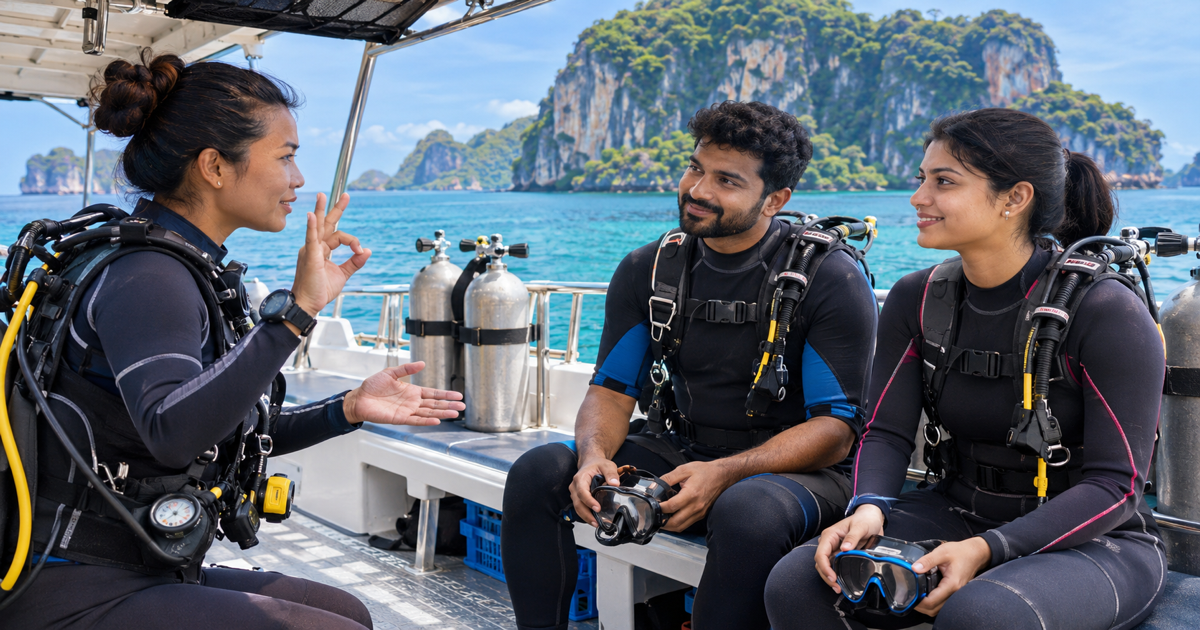
A Thailand scuba diving package can be an introductory experience, a certification course, a few guided fun dives or a boat-based diving holiday. Those are different products with different medical, training, equipment and scheduling requirements. This guide helps travellers from India compare them responsibly, protect flight connections and ask for the operational details that a beach photograph or package headline cannot show.
Start with your actual diver level
Tell the operator whether each traveller is a non-swimmer, confident swimmer, first-time participant, student diver or currently certified diver. Do not book a certified-diver itinerary for someone who has only completed a resort introduction.
For certified divers, share the training agency, certification level, number of logged dives, date of the most recent dive and experience in the conditions proposed. The operator, not the tour-package label, must decide whether a site and activity suit the diver.
- Introductory experience under professional supervision
- Entry-level certification course
- Referral or continuing course
- Guided fun dives for certified divers
- Refresher before open-water diving
- Liveaboard for appropriately experienced divers
Choose a region for the trip, not a promised sighting
The Tourism Authority of Thailand identifies Ko Tao as a major scuba destination. Southern gateways such as Phuket and Krabi can also fit a wider island holiday, while the appropriate departure point depends on the dive site, season, marine access and operator schedule.
Wildlife, visibility, currents and sea conditions cannot be guaranteed. Ask which sites are normally considered for your dates, who makes the final call and what alternative is offered if weather, safety or official closures change the plan.
- Ko Tao for a dive-centred island stay
- Phuket for day boats and a wider resort itinerary
- Krabi for a beach holiday with selected dive days
- Khao Lak as a gateway for some Andaman itineraries
- One base with rest days instead of rushed island changes
Verify the dive operator separately
Ask for the legal business name of the dive centre, training-agency affiliation where relevant, named instructor or divemaster, teaching language and maximum group size. A hotel or travel agent can arrange the activity, but the dive professional remains responsible for the briefing and in-water supervision.
Request the emergency plan, communication method, first-aid and oxygen arrangements, nearest suitable care pathway and procedure for a missing or separated diver. These questions are normal risk checks, not a demand for a zero-risk guarantee.
- Named dive centre and professional
- Current professional status where applicable
- Diver-to-guide or student-to-instructor ratio
- Boat licence and passenger capacity
- Emergency oxygen and trained user
- Surface communication and recall method
- Cancellation and site-change policy
Complete medical screening honestly
PADI states that student divers complete a medical questionnaire designed to identify conditions that may require evaluation by a doctor before diving. Download or request the current form early, answer it honestly and obtain the required medical approval before travel rather than hoping to resolve it on the boat.
A positive answer does not automatically mean a person can never dive, and a tour company should not interpret medical suitability. Anyone who is unwell, pregnant or attempting pregnancy, has a relevant condition, takes medication that may affect diving, or has had a material health change should follow the current screening form and appropriately qualified medical advice.
- Request the operator's current medical form
- Allow time for a doctor familiar with dive medicine when required
- Do not conceal a condition to protect a booking
- Carry necessary medication in hand luggage
- Tell the professional if health changes before the dive
- Never treat travel insurance as medical clearance
Buy insurance that actually covers the planned diving
General international travel insurance may exclude scuba, apply depth or certification limits, restrict liveaboards or treat evacuation differently from treatment. Read the policy wording and obtain written clarification for the exact activity.
Match the policy to introductory diving, training, recreational depth, equipment, boat transfers and any planned remote itinerary. Also check medical evacuation, hyperbaric treatment, trip interruption and pre-existing-condition terms; the cheapest policy is not necessarily the relevant one.
- Scuba activity explicitly included
- Certification and depth limits
- Introductory or course participation
- Search, rescue and evacuation terms
- Hyperbaric treatment coverage
- Liveaboard inclusion if applicable
- Equipment loss or damage
- Emergency contact process
Protect the no-dive period before flying
Divers Alert Network explains that lower aircraft-cabin pressure can increase decompression-sickness risk after diving. Its current guidance gives minimum preflight surface intervals that vary with the dive profile and notes that longer intervals further reduce risk.
Do not calculate the itinerary from a generic package promise. Give the operator your exact flight time, follow the most conservative applicable instruction from the dive professional, training agency, computer and current DAN guidance, and reserve the final day for land activities. Driving to altitude after diving also needs professional consideration.
- International flight departure time
- Domestic flight or high-altitude road plan
- Number of diving days
- Single or repetitive dives
- Any decompression obligation
- A protected non-diving final day
- A plan if the dive schedule changes
Understand equipment and boat inclusions
A package should list what is included rather than simply saying full gear. Confirm the regulator, buoyancy device, exposure suit, mask, fins, weights, tank, dive computer and safety equipment relevant to the activity, plus the sizing process and replacement procedure.
Certified divers bringing personal equipment should ask about airline baggage, tank and weight exclusions, maintenance responsibility and storage. Never assume a rental computer is included, and do not use unfamiliar equipment without a fitting and briefing.
- Rental items listed individually
- Correct size reserved in advance
- Dive computer inclusion
- Tank type and valve compatibility
- Inspection and replacement process
- Boat towel, water and meal details
- Marine-park or pier fees
- Personal-equipment baggage allowance
Compare day boats and liveaboards realistically
A day boat returns to land and can fit a mixed beach holiday, but departure and return times may be long. A liveaboard concentrates multiple dives and nights on a vessel, so cabin, seasickness, experience, medical access and evacuation questions become more important.
First-time divers should not select a liveaboard simply because the per-dive calculation looks attractive. Ask about minimum certification, required logged dives, currents, night dives, cabin privacy, bathroom type, charging rules, food, drinking water and non-diving alternatives.
- Exact embarkation and return points
- Transfer from the hotel
- Minimum certification and experience
- Number and type of proposed dives
- Cabin and bathroom arrangement
- Dietary capability and cross-contact
- Seasickness planning
- Missed-departure and early-exit terms
Plan for non-divers and families
A couple or family package does not require everyone to dive. A non-diver may prefer a separate beach, cultural or spa plan, and a boat passenger should confirm whether snorkelling, swimming or remaining aboard is actually allowed.
Children must meet the activity provider's current age, training, medical and supervision rules. A parent participating in a dive cannot simultaneously supervise a child on the boat, so name the responsible adult and confirm safe childcare rather than assuming crew will provide it.
- Separate non-diver price
- Passenger and snorkelling rules
- Child age and supervision requirements
- Life jackets in suitable sizes
- Shade, toilet and seasickness support
- Hotel-based alternative activity
- Clear reunion time and location
A balanced eight-night planning pattern
An eight-night outline can place the dive base after a calm arrival, allow a briefing or refresher, separate demanding days and protect the final surface interval. It is an example structure, not a universal medical or training schedule.
A practical pattern is arrival and rest, transfer to one coastal base, operator check-in and equipment fitting, two or three appropriately planned dive days with recovery time, a full land day, then onward travel or departure. The dive professional must approve the actual sequence.
- Night 1: arrive and recover
- Night 2: reach the coastal base and check in
- Day 3: paperwork, fitting, briefing or refresher
- Days 4–6: suitable diving with operator-led pacing
- Day 7: protected non-diving land day
- Day 8: cultural or beach time without diving
- Day 9: fly only after the applicable safe interval
Final quotation checklist
The travel quotation and dive booking should agree on dates, pickup point, participant level and inclusions. If the tour operator uses a third-party dive centre, obtain that centre's confirmation and terms as well as the holiday invoice.
Sea conditions, official restrictions and individual suitability can change. A trustworthy package explains who makes safety decisions, what happens when diving is cancelled and which unused components are refundable rather than pressuring a traveller to enter the water.
- Correct diver level for every participant
- Named operator and professional
- Medical form and clearance deadline
- Insurance wording checked
- Equipment and fees itemised
- Boat type and group size
- Emergency plan
- Final dive-to-flight buffer
- Non-diver arrangements
- Weather cancellation and refund terms
Official sources
These primary sources were checked on November 14, 2026. Reconfirm event operations close to travel.
Build a safer Thailand dive holiday
Share your certification, recent experience, travel dates, flight plan and non-diver needs for a Thailand itinerary with transparent dive-day logistics.