Thailand Meditation Retreat Tour Packages from India
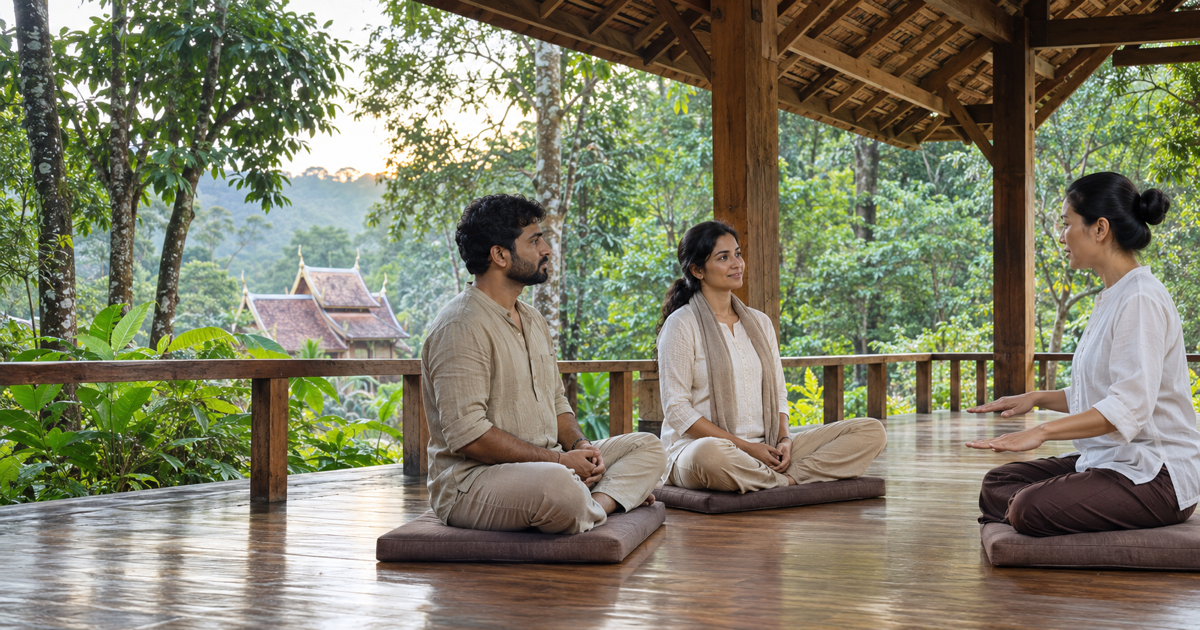
A Thailand meditation retreat can mean a short class at a Bangkok temple, a disciplined residential programme with silence and early mornings, or a comfortable commercial retreat that combines mindfulness with accommodation and leisure. These are not interchangeable products. The Tourism Authority of Thailand (TAT) identifies wellness and meditation retreats as a distinct tourism cluster, and official listings include temples that teach foreign visitors. This guide helps travellers from India compare the teaching, rules, language, meals, rooms and support behind the label so they can choose a retreat that fits their purpose without treating meditation as medical care or a guaranteed cure.
Choose the retreat format before the destination
A beginner who wants one guided session needs a different package from someone ready for several days of noble silence and structured practice. Start by deciding the length, religious context, daily intensity and level of comfort the traveller genuinely accepts.
A temple class can introduce Buddhist meditation without requiring a residential stay. A monastery retreat may expect strict conduct, simple accommodation and participation in the community schedule. A commercial mindfulness retreat may offer private rooms and flexible sessions but should not be presented as a monastery experience.
- One introductory temple class
- Half-day guided mindfulness session
- Weekend non-residential programme
- Residential temple retreat
- Silent Vipassana-style programme
- Commercial nature retreat
- Private teacher-led stay
- Meditation plus a wider cultural holiday
Separate temple programmes from wellness resorts
TAT's official listing for Wat Mahathat in Bangkok states that the temple offers meditation classes for foreigners. This kind of city programme can suit travellers who want an introduction while maintaining their own hotel and meal arrangements.
A residential temple programme is usually governed by religious practice and local rules. A wellness resort is a commercial hospitality product with different staffing, rooms and cancellation terms. Neither format is automatically better, but the package must identify which one it sells.
- Temple or monastery name
- Commercial retreat or resort name
- Residential or day attendance
- Buddhist teaching or secular mindfulness
- Teacher role and language
- Guest services included
- Religious observance expected
- Commercial terms stated separately
Read the daily schedule before paying
Residential retreats may begin before sunrise and include alternating seated and walking meditation, talks, chores, meals and long periods without entertainment. Silence can mean no conversation, phones, reading, music or journaling, depending on the centre.
Request the current timetable and rules in writing. Confirm wake-up time, practice hours, meal timing, rest periods, phone storage, permitted reading, check-in orientation and whether leaving early is allowed. Do not assume that a shorter advertised retreat is a relaxed holiday.
- Wake-up and lights-out
- Seated and walking sessions
- Teaching or interview time
- Silence rules
- Phone and device policy
- Community chores
- Meal schedule
- Rest and personal-care time
- Early-departure process
Verify instruction language and beginner support
A centre may welcome foreigners without providing continuous English teaching. Ask which sessions are interpreted, whether written instructions are available and how a participant can raise a practical or health concern during silence.
Beginners benefit from clear posture options and a teacher who distinguishes discomfort from harm. Meditation does not require forcing the body into a cross-legged pose. Confirm whether chairs, benches, cushions or walking practice are available.
- Teaching language
- Interpreter availability
- Written orientation
- Private teacher interview
- Chair and cushion options
- Walking meditation guidance
- How to ask for help during silence
- Beginner and experienced participants separated where needed
Check accommodation rather than imagining a resort
Temple accommodation may be shared, fan-cooled and simple, with mattresses or bedding unlike a hotel. Bathrooms may be communal, and participants may need to bring toiletries, a towel, bedding or modest white clothing. A commercial retreat may offer private air-conditioned rooms but charge separately for transfers or treatments.
Ask for current room photographs and a written facilities list. Confirm room sharing, bathroom arrangement, mosquito protection, laundry, drinking water, electricity, luggage storage and accessibility. A peaceful forest location can still involve insects, humidity, uneven paths and limited shops.
- Private or shared room
- Bed and bedding
- Fan or air conditioning
- Private or shared bathroom
- Hot water
- Mosquito protection
- Laundry
- Drinking water
- Power and charging rules
- Step-free access
- Items the guest must bring
Plan meals for Indian dietary requirements
Temple meals may be simple, communal and served only at set times, sometimes with no evening meal. A vegetarian label does not automatically meet vegan, Jain, halal or allergy requirements. Garlic, onion, egg, fish sauce, dairy and shared preparation may matter to different travellers.
Send requirements to the centre before booking and accept its honest limitations. Do not ask a donation-supported temple kitchen to operate like a made-to-order restaurant. A commercial retreat should state ingredients, meal count and substitutions in its paid package.
- Number and timing of meals
- Vegetarian ingredients
- Jain restrictions
- Egg and dairy
- Fish sauce or shrimp products
- Allergies and cross-contact
- Fasting expectations
- Drinking water
- Permitted personal snacks
- Food available after early departure
Treat health and mental wellbeing responsibly
Meditation can be meaningful, but a retreat is not a substitute for medical or mental-health care and should not promise to cure anxiety, depression, trauma, insomnia or another condition. Intensive silence, sleep changes and long practice periods may be unsuitable for some people.
Disclose relevant health, mobility and mental-health needs to the centre and follow qualified professional advice before booking when appropriate. Ask about emergency contacts, medication access, nearest medical support and the process for pausing or leaving. Never stop prescribed treatment because a retreat advertises healing.
- No guaranteed therapeutic outcome
- Relevant needs disclosed
- Medication kept and taken as prescribed
- Emergency contact
- Nearest suitable medical facility
- Teacher is not assumed to be a clinician
- Option to reduce or stop practice
- Travel insurance terms checked
Follow temple etiquette and clothing rules
Temple retreats may request loose white clothing that covers shoulders and knees, with no transparent or tight fabric. Remove shoes where directed, keep voices low, avoid pointing feet toward Buddha images and follow gender-specific accommodation or seating rules without argument.
Do not photograph monks, teachers, ceremonies or private spaces without permission. Donations and programme fees should be distinguished clearly. A package operator should never turn alms, chanting or a teacher meeting into a staged photo opportunity.
- Modest clothing specification
- White garments if required
- Shoes removed in designated areas
- Respectful seating
- No physical contact with monastics unless locally appropriate
- Photography permission
- Donation and fee separated
- No alcohol, smoking or recreational drugs
Build the wider holiday around re-entry time
Do not schedule a residential retreat immediately after an overnight flight or directly before an international departure. Arrival orientation matters, and leaving silence for a crowded airport can feel abrupt. Add a quiet hotel night before and after when the itinerary allows.
Couples and families should decide whether everyone will attend. Many retreats are not designed for children, social conversation or shared couple time. A non-participating companion needs a separate hotel and itinerary rather than waiting nearby without a clear plan.
- Rested arrival before check-in
- Transport confirmed to the exact centre
- No late arrival unless accepted
- Quiet night after completion
- Companion plan
- Child policy
- No nightlife or intensive tour immediately afterward
- Departure buffer
A balanced eight-night planning pattern
A first-time traveller could spend two nights in Bangkok, attend a short English-language temple class, then complete a three-night retreat outside the city followed by two quiet hotel nights and departure. The introductory session helps test expectations before a residential programme.
This is a planning model rather than a fixed offer. Experienced practitioners may choose a longer stay, while uncertain beginners may keep the whole trip non-residential. The centre's admission process and current rules should determine the final plan.
- Day 1: arrive and rest
- Day 2: Bangkok orientation
- Day 3: introductory class and retreat briefing
- Day 4: transfer and residential check-in
- Days 5–6: structured retreat
- Day 7: completion and quiet hotel transfer
- Day 8: gentle independent day
- Day 9: buffered departure
Final booking checklist
A transparent meditation package names the exact centre, teacher format, language, daily schedule, accommodation, meals, transfers, rules and emergency process. It also makes clear which parts are donations, confirmed paid services or optional requests.
Reconfirm dates and admission directly with the centre. TAT sources establish meditation as a visitor and wellness experience and identify relevant locations; they do not guarantee acceptance, teacher availability or the suitability of a programme for an individual.
- Exact centre and contact
- Confirmed admission dates
- Temple or commercial format
- Teacher and language
- Full daily schedule
- Silence and device rules
- Room and bathroom
- Meals and dietary handling
- Health and emergency process
- Transfer
- Companion plan
- Cancellation and early-departure terms
Official sources
These primary sources were checked on November 23, 2026. Reconfirm event operations close to travel.
Choose a retreat whose real schedule fits you
Share your dates, experience level, preferred format and practical needs for a Thailand itinerary with a verified meditation programme and protected recovery time.