Thailand Cycling Tour Packages from India: Planning Guide
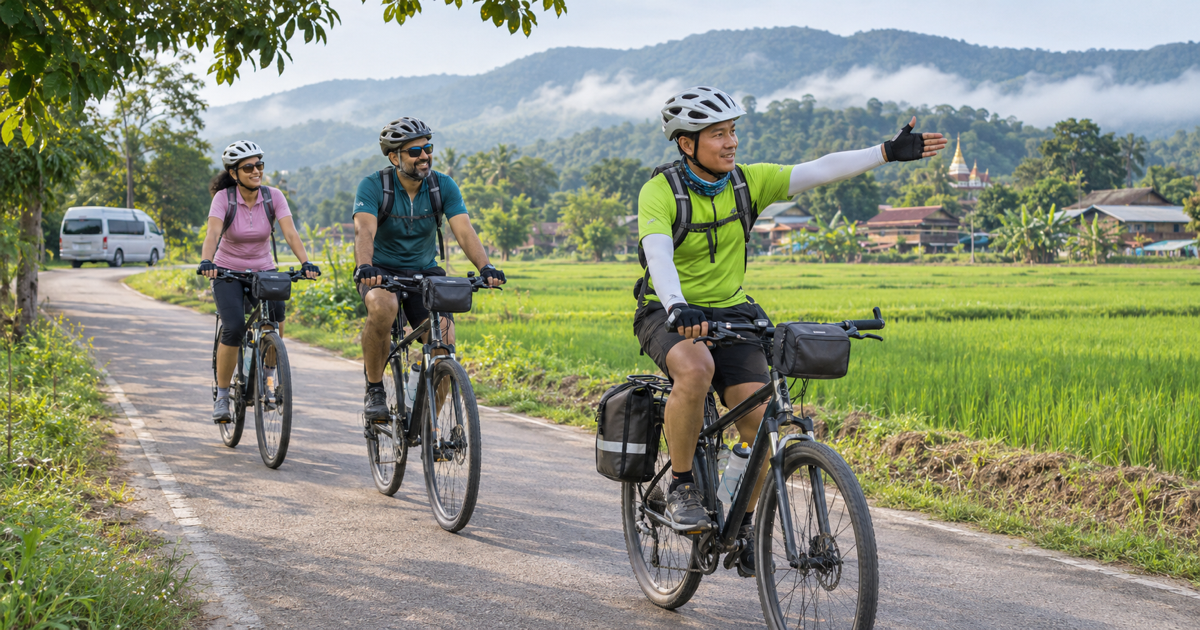
A Thailand cycling package can mean a gentle heritage ride, a half-day countryside tour, several supported riding days or a demanding point-to-point journey. Those products require very different fitness, equipment, road exposure and logistics. This guide helps travellers from India compare them honestly, request a properly fitted bicycle and support plan, and build an active holiday without accepting vague distance, safety or difficulty claims.
Choose the ride before the destination
Decide whether cycling is one activity in a wider holiday or the main purpose of the trip. A two-hour Old City ride can fit a first visit, while a supported multi-day tour requires training, recovery time, luggage transfers and a clear exit option.
Tell the operator about current riding frequency, comfortable distance, climbing experience, road confidence and any participant who needs a slower pace. Do not choose a route from scenic photographs alone.
- Beginner heritage ride
- Family-friendly park or countryside loop
- Half-day guided city ride
- Full-day rural ride
- Multi-day supported cycling tour
- E-bike-assisted itinerary
- Accessible handcycle or adapted cycle programme
Demand a route-grade sheet
Easy, moderate and challenging are marketing words unless the package defines them. Request daily distance, total climbing, surface, traffic exposure, technical sections, likely heat and the amount of time spent away from the support vehicle.
A short ride can still be difficult when it includes steep gradients, broken surfaces or busy junctions. Conversely, a longer flat ride on protected or quiet roads may suit a steady recreational cyclist.
- Distance for every riding day
- Elevation gain and major climbs
- Paved, gravel or trail surface
- Busy-road and junction sections
- Expected riding and total tour time
- Shade, water and toilet stops
- Vehicle access points
- Alternative for each difficult segment
Pick a region that suits the group
Tourism Authority of Thailand presents cycling as a way to experience local culture and landscapes. Ayutthaya can suit a heritage-focused ride when the route avoids the hottest period and busiest roads, while Chiang Mai can offer Old City, countryside and hill options with very different levels of difficulty.
Do not combine several cycling regions merely to create a longer itinerary. One well-chosen base allows proper bike fitting, consistent support and rest days, while the wider holiday can add Bangkok or a beach without riding every day.
- Ayutthaya for a heritage-focused day ride
- Chiang Mai Old City for a gentle cultural introduction
- Chiang Mai countryside for rural lanes
- Selected southern or island routes after checking heat, traffic and ferry logistics
- One regional cycling base for a week-long mixed holiday
Bike fit is a package inclusion, not a favour
The operator should collect height and relevant measurements before travel, reserve the correct frame and complete an in-person fit. Confirm the bicycle type, size range, gearing, brakes, saddle adjustment, pedal type and repair condition.
A short test ride must happen before the first real route. Report pain, numbness, unstable handling or brake-reach problems immediately; the guide should adjust or replace the bicycle rather than asking the traveller to tolerate it.
- Frame size reserved
- Saddle height and position
- Handlebar reach
- Brake-lever reach
- Suitable gearing
- Flat or clipless pedals
- Helmet size
- Spare tube and repair kit
- Replacement-bike process
Treat e-bikes as bicycles with extra checks
An e-bike can help a mixed-ability group ride together, but it does not remove the need for balance, braking, traffic awareness or fitness. Ask about assistance levels, range under the proposed conditions, battery management, charging and what happens if power fails.
The traveller should receive a controls briefing and test ride. Confirm whether the route, transport vehicle, ferry or accommodation can safely handle the e-bike's weight and battery; never assume an airline will carry a large e-bike battery.
- Step-through or standard frame
- Motor and assistance controls
- Battery range for the actual route
- Charging plan
- Bike weight
- Manual riding if assistance stops
- Support-vehicle capacity
- Battery transport restrictions
Verify guide and support-vehicle standards
Ask for the lead guide's name, language, route experience, first-aid capability and maximum rider-to-guide ratio. Larger groups may need a second guide or sweep rider so nobody is abandoned behind the main group.
For multi-day or remote rides, identify the support vehicle, driver, seating, luggage space, water, tools and pickup points. The vehicle should be an exit option for fatigue, illness or weather, not only a luggage transfer.
- Named lead guide
- Sweep rider where group size requires
- Pre-ride briefing
- First-aid and emergency communication
- Support vehicle and driver
- Bike-carrying method
- Water and nutrition stops
- Breakdown response
- Rider-accounting procedure
Make road exposure explicit
A responsible operator should describe traffic conditions and choose roads appropriate to the group's confidence. Quiet does not mean traffic-free, and rural lanes can still have dogs, farm vehicles, potholes or limited lighting.
Wear the supplied helmet correctly, follow the guide's formation and hand signals, keep safe spacing and stop fully before checking a phone or map. If a section feels unsafe, use the support vehicle instead of riding under pressure.
- Helmet required for every ride
- No headphones that block traffic awareness
- No phone use while moving
- Front and rear lights when conditions require
- Reflective or visible clothing
- Single-file riding where instructed
- No racing the guide
- Support-vehicle bypass for unsuitable sections
Build weather and air-quality cut-offs
Heat, heavy rain, lightning, flooding, smoke and poor air can make a planned ride unsuitable. Ask who makes the stop decision, what data they use and which indoor or non-riding activity replaces the route.
Early starts and shaded routes may improve comfort but do not guarantee safety. Travellers should be free to shorten or skip a ride without losing essential transfers, accommodation or meals in a bundled itinerary.
- Heat and hydration plan
- Rain and lightning procedure
- Flooded-road avoidance
- Air-quality review
- Earlier start when appropriate
- Indoor or vehicle-based fallback
- Clear refund or substitution terms
- No pressure to ride through unsafe conditions
Prepare health, hydration and insurance
Cycling in a hot climate can be more demanding than the same distance at home. Build fitness gradually before travel, schedule recovery, eat regularly and discuss relevant medical conditions or medication with an appropriately qualified healthcare professional.
Travel insurance must explicitly cover the type of cycling planned. Check exclusions for racing, mountain biking, off-road riding, e-bikes, altitude, personal equipment and evacuation; a generic adventure label is not enough.
- Pre-trip fitness appropriate to the route
- Medical advice when needed
- Water and electrolyte plan
- Sun protection
- Food timed around the ride
- Cycling activity named in insurance
- Off-road and e-bike terms
- Medical evacuation and equipment cover
- Emergency contact stored offline
Transport personal cycling equipment carefully
Most leisure travellers can use a reputable local rental bike and carry only personal contact items such as a helmet, gloves, glasses or saddle if the operator agrees. Bringing a complete bicycle from India adds airline, packing, transfer and assembly complexity.
If taking a bicycle, obtain the operating airline's current sports-equipment rules and pre-booking requirements. Confirm box dimensions, weight, fees, battery restrictions, airport handling and whether the Thai transfer vehicle can carry the packed case.
- Rental bike or personal bike decision
- Airline sports-equipment reservation
- Bike-case dimensions and weight
- Tool and CO2-cartridge restrictions
- No large e-bike battery without explicit airline approval
- Airport vehicle capacity
- Qualified assembly and safety check
- Secure storage between rides
Plan for families, partners and adapted cycling
A mixed holiday can let one traveller complete an early ride while a partner or family member follows a separate cultural, food or wellness plan. Confirm non-rider pricing and reunion logistics rather than paying for an activity nobody wants.
TAT's 2026 support for an international handcycle journey shows that adapted cycling can be organised with substantial coordination. That does not mean every local operator or route is accessible. Ask about the exact cycle, transfers, toilets, surfaces, support team and individual assistance required.
- Child bike, trailer or seat suitability
- Minimum age and skill rules
- No child supervision by the guide alone
- Non-rider vehicle seat
- Adapted-cycle specifications
- Transfer and toilet accessibility
- Individual assistance agreed in writing
- Shorter loop or early pickup
A balanced eight-night itinerary
An eight-night active holiday can include a calm Bangkok arrival, one cycling base, three riding days separated by rest or cultural time, and a final departure buffer. The pattern gives the operator time to solve fit issues before the longest ride.
For example, begin with a fitting and short orientation, follow with a gentle cultural ride, take a non-riding day, complete the main countryside route, then keep another flexible day for weather. Distances must be tailored to the group rather than copied from a racing itinerary.
- Nights 1–2: Bangkok arrival and rest
- Night 3: reach the cycling base and complete the fit
- Day 4: short orientation ride
- Day 5: cultural or recovery day
- Day 6: main supported ride
- Day 7: flexible ride or weather backup
- Night 8: return near the international departure airport
Final quotation checklist
The cycling quotation should name the route, daily distance and climbing, surface, traffic exposure, bicycle, helmet, guide, support vehicle, meals, water, luggage transfers, insurance expectations and weather alternatives.
It should also explain how a participant can stop riding and what remains included afterward. Avoid packages that advertise only total kilometres, guaranteed scenery or an easy label without showing the operating plan.
- Route-grade sheet
- Correct bike and fit
- Helmet and safety equipment
- Named guide and group ratio
- Support vehicle
- Road and weather cut-offs
- Insurance activity match
- Personal-equipment logistics
- Non-rider and child plan
- Early-exit process
- Cancellation and substitution terms
Official sources
These primary sources were checked on November 17, 2026. Reconfirm event operations close to travel.
Build a supported Thailand cycling holiday
Share your dates, riding experience, comfortable distance, bike preference and companion needs for a Thailand itinerary with transparent grades and support logistics.